CoNavigator
An Interdisciplinary collaboration & problem solving tool
Exploration
Evaluation
Strategic planning
Problem solving
CoNavigator in brief
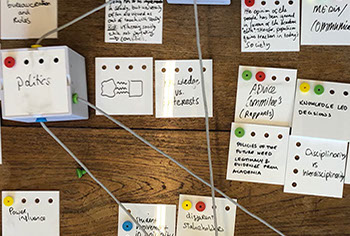
CoNavigator is a hands-on, 3-dimensional tool which can be used for learning purposes in educational settings and as a fast-tracking tool for interdisciplinary problem solving.
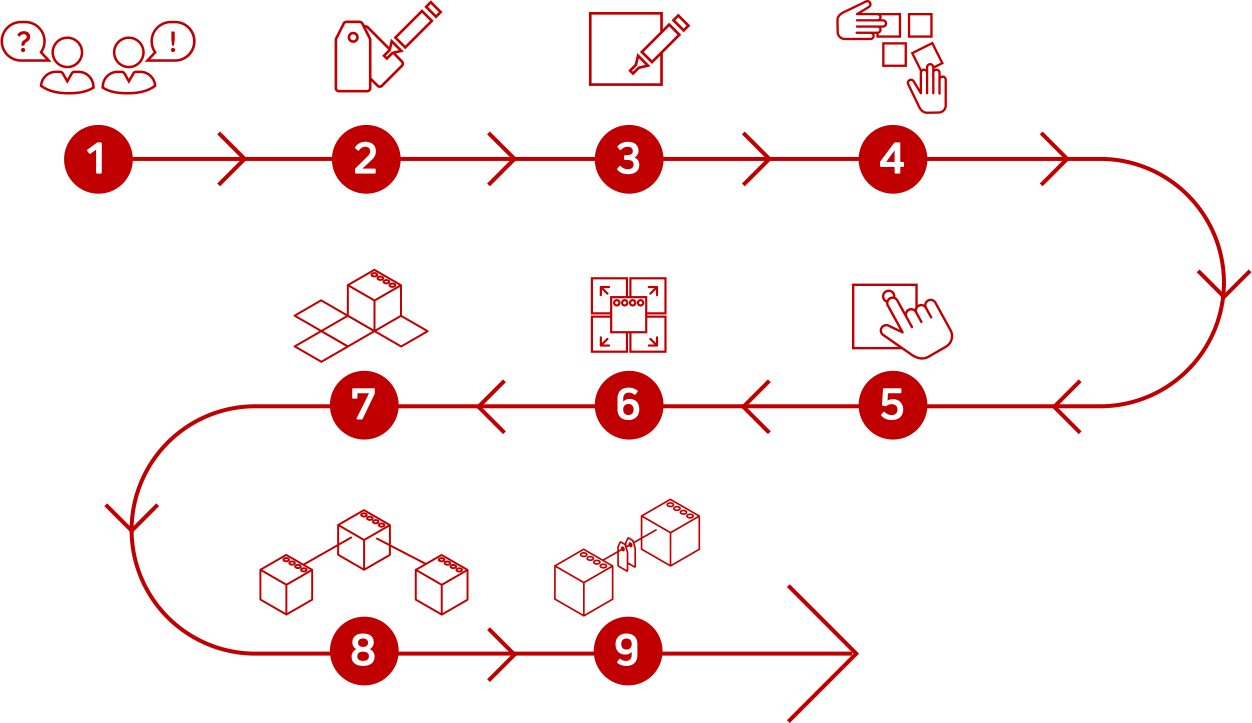
Diagram shows the steps of one of the many component-based processes for which the tool can be used.
CoNavigator in brief
CoNavigator is a component-based structure for configurable sessions according to time, participants, contexts and desired outcomes.
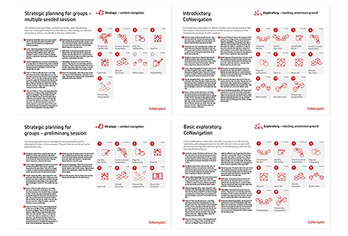
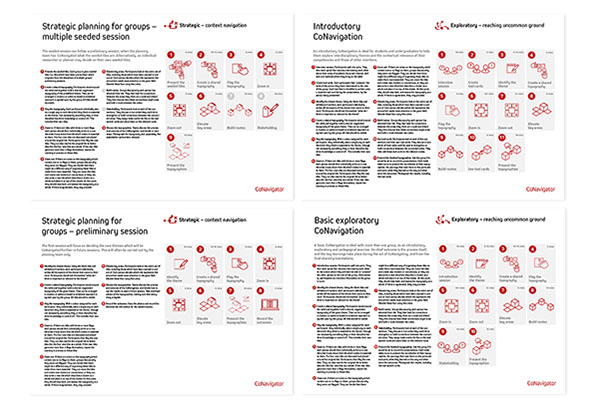
Diagram shows the facilitation notes for four of the most common types of CoNavigator sessions.
CoNavigator in brief
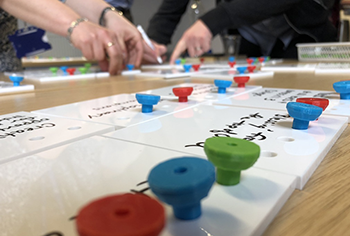
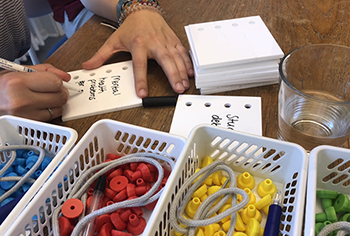
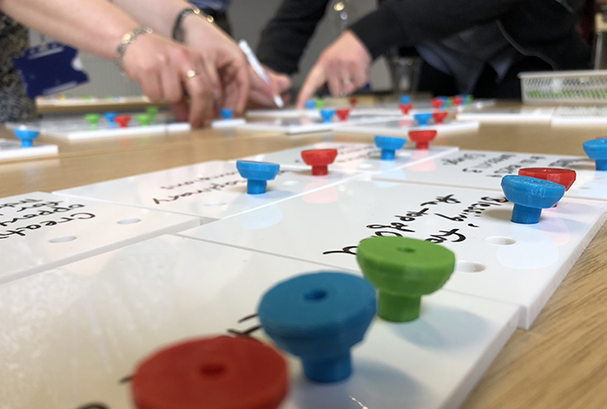
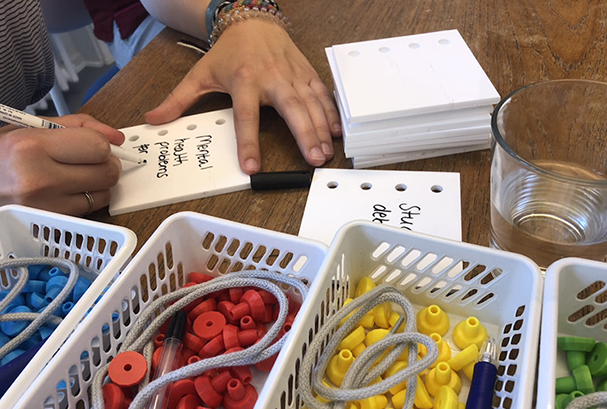
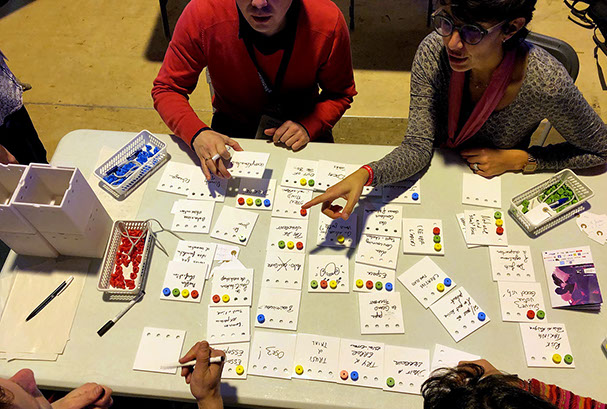
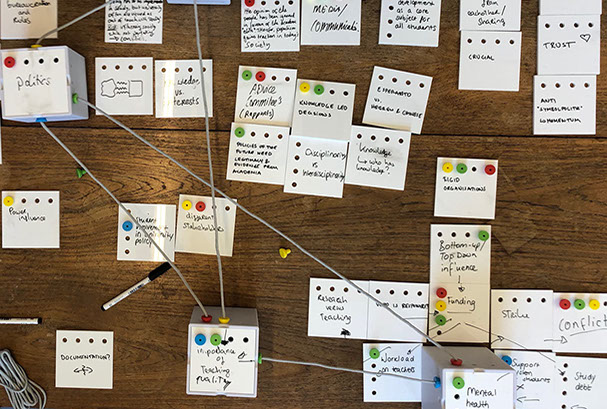
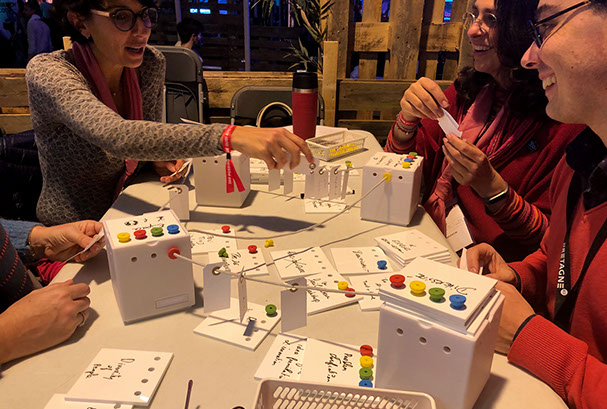
CoNavigator is composed of writeable tiles and cubes to enable rapid, collaborative visualisation. The tactile nature of the tool is designed to encourage democratic collaboration and negotiation over a series of defined steps.
All the elements are reusable and designed for easy storage.
CoNavigator in brief
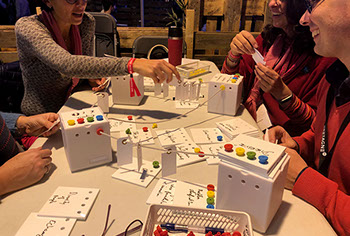
CoNavigator addresses the contextual and local circumstances and the unique combinations of members in collaborative teams. CoNavigator is therefore short for both Context Navigation and Collaboration Navigation.
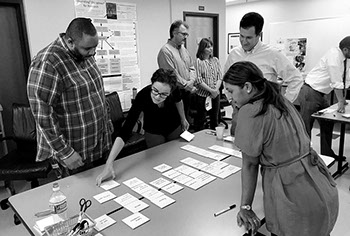
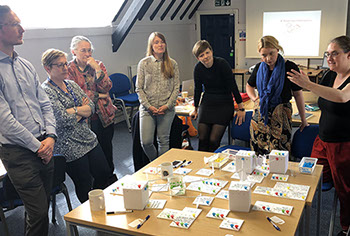
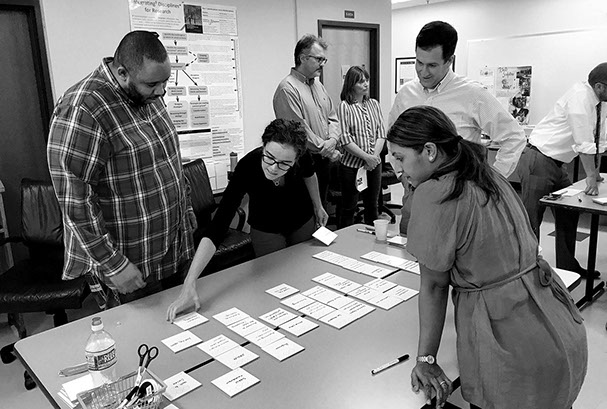
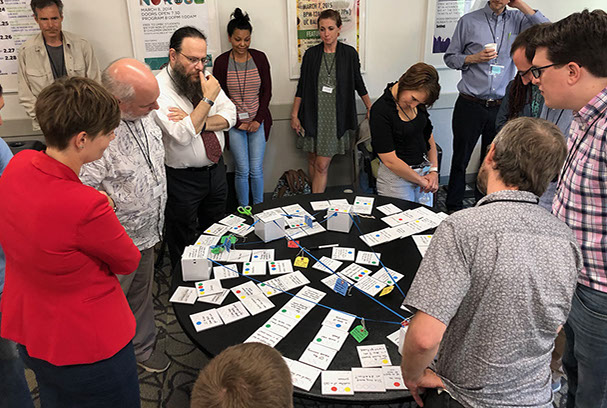
UMBC, faculty staff using CoNavigator on Campus in Baltimore, Maryland, 2017.
CoNavigator in brief
CoNavigator is designed to act as both an entry point to interdisciplinary exploration and as a tool which can be be used continually in the longer term to help teams navigate through complex problems and themes.
CoNavigator in brief
"CoNavigator is a creative and practical tool for a variety of groups, helping people embarking on the exciting journey of interdisciplinarity to take the first step."
Laura R. Meagher, Ph. D.
Senior Partner at Technology
Development Group, Fife, Scotland
CoNavigator in brief
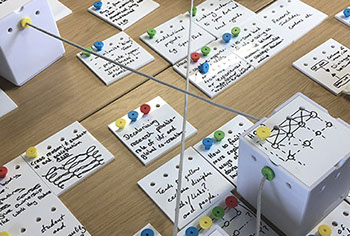
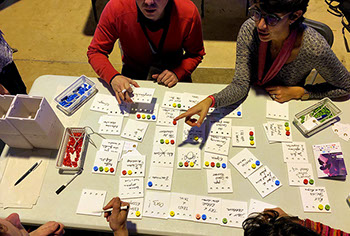
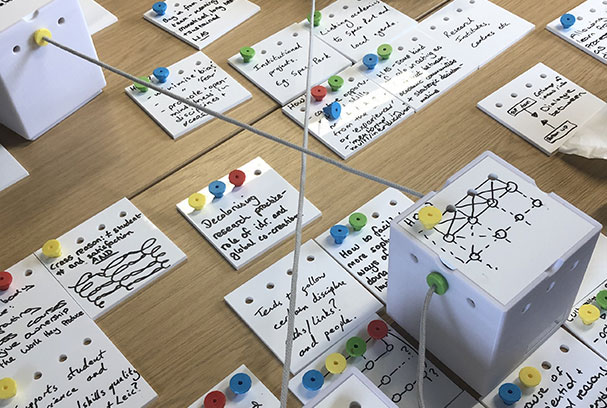
CoNavigator encourages negotiation and shared understanding. The tactile nature of the tool is designed to encourage collaboration and negotiation, while the writable tiles and connectable cubes enable rapid, collaborative visualization. The topographies are easy to photograph for later use, while each participant takes with them their individual “tool-swatch”, which can help them to identify and contextualize their role in future collaborations.
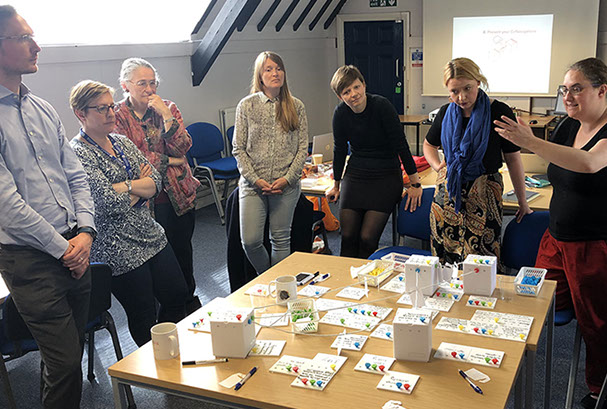
Leicester Institute of Advanced Studies carry out a CoNavigator session, summer 2019.
CoNavigator in brief
"As well as providing an excellent, interactive teaching tool for students, CoNavigator can help teaching faculty and research teams explore complex interdisciplinary connections and roles and understand the interdisciplinary ‘landscape’ of a wide range of topics."
Professor Catherine Lyall
Professor of Science and Public Policy
The University of Edinburgh
CoNavigator in brief
"In both research and teaching planning processes, CoNavigator can help teams of collaborators make tangible their assumptions, expectations and knowledge from the outset, avoiding frustrating misunderstandings at a later stage in the project."
Professor Catherine Lyall
Professor of Science and Public Policy
The University of Edinburgh
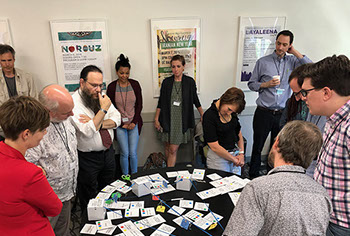
NASA /NSF assess an Ideas Lab, with the aid of CoNavigator. UMBC, Maryland, 2018.
CoNavigator in brief
"Many tools available today are trying to deal with the art of problem-solving by asking why and how! Here’s a tool that comes even before that and challenges you in an analogue way with questioning the questions and the underlying perceptions of collaboration."
Stine Mølgaard Sørensen
Digital strategist, Partner in Nordic Fintech Angels and COO in Radiobotics
CoNavigator in brief
"CoNavigator is an excellent, hands-on tool that supports the development of collaborative capacity. It provides a structure for discovering, articulating, and coordinating relevant assumptions in a collaborative group and can serve as a decision support tool in educational and research contexts.
Michael O’Rourke
Professor of Philosophy, Michigan State University and Director of the Toolbox Initiative.
6 – 11
CoNavigator in action
Latest articles & posts
Research article: Extending CoNavigator into a Collaborative Digital Space
Murnane, M, Engel, D Freeland, S, Boot, L Jarzynski, M, Lindvig, K Hillersdal, L, Earle, D (2020)
See the six core steps in a CoNavigator session.
Design prototyping
A central part of the CoNavigator tool is its tactile, hands-on nature which encourages groups to interact and negotiate with each other in a more physical way. At the same time the physical act of collaboration should be a rewarding experience. The CoNavigator tool is undergoing ongoing prototyping and development of improved design and physical performance.
Abstract (Danish): CoNavigator –Navigering i tværfaglige fællesskaber og kontekster
Katrine Lindvig, Line Hillersdal, David B. Earle
Continuous Development
Hand in hand with the tool's design, the methods used are constantly being developed, improved upon and tested. We also encourage collaboration and active feedback from the groups, faculties and institutions who use the CoNavigator tool.
The CoNavigator team
Katrine Lindvig
Educational ethnographer at the Department of Science Education, University of Copenhagen, Denmark. She specialises in interdisciplinary education, especially the linkages between interdisciplinary research and interdisciplinary teaching practices.
Line Hillersdal
Social anthropologist and Assistant Professor at the Department of Anthropology, University of Copenhagen, Denmark. She specialises in interdisciplinary research collaboration and is particularly involved in how research objects are configured in collaborative practices.
David Earle
Concept developer and partner at Braintrust, an academic think tank based in Copenhagen, Denmark. He develops visual and tactile tools and methods to help students learn to navigate through their academic knowledge, and to work more effectively in multi- and interdisciplinary teams.